




The EV revolution is changing the way India thinks about mobility. The next question is changing too: Where will all these vehicles get their energy—and how clean, reliable and economical can that energy be?
India is rapidly building an electric mobility ecosystem. The Government of India reported 29,151 public EV charging stations installed across the country as of February 2026, while the PM E-DRIVE programme has allocated ₹2,000 crore specifically for deployment of public EV charging infrastructure. At the same time, EV adoption continues to expand across two-wheelers, three-wheelers, buses and other segments.
This creates an important opportunity for the renewable-energy industry: integrating solar generation with EV charging infrastructure. Rather than treating an EV charging station only as an electricity-consuming facility, a solar-integrated charging station can be designed as a broader clean-energy asset.
India’s EV Charging Market Is Entering Its Next Phase
Electric mobility depends on one essential piece of infrastructure: charging. As EV adoption grows, charging points must become more available, dependable and strategically located.
The policy environment is already moving in that direction. The Ministry of Heavy Industries has stated that setting up EV charging stations is an unlicensed activity, allowing private entities to establish, operate and maintain EV charging stations in accordance with the applicable Ministry of Power guidelines.
The PM E-DRIVE scheme is also designed to accelerate public charging infrastructure across India, including cities, highways and other locations. The scheme’s ₹2,000 crore allocation for EV public charging stations signals the scale of infrastructure required for the next stage of electric mobility.
Why Solar + EV Charging Makes Strategic Sense
A conventional EV charging station primarily draws electricity from the grid. A solar-integrated charging station adds another layer: on-site renewable generation.
1. Cleaner charging
Solar generation can supply a portion of the electricity used for EV charging, helping reduce the carbon intensity associated with grid electricity.
2. Better energy economics
Where solar generation aligns with charging demand, on-site solar can reduce the amount of electricity that needs to be purchased from the grid. Actual savings depend on tariffs, solar resource, system size, utilisation and operating model.
3. Greater energy resilience
A well-designed system can combine solar, grid supply and—where economically appropriate—battery storage to improve operational flexibility.
4. Stronger green-brand positioning
For businesses, hotels, highways, commercial campuses and fleet operators, visible solar-powered charging infrastructure can reinforce a sustainability strategy.
5. A platform for future energy services
Charging infrastructure can become the foundation for energy monitoring, battery storage, demand management, fleet charging and other digital energy services.
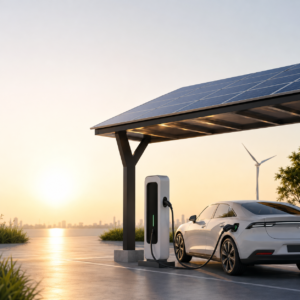
Solox Energies Solar EV Stations
The Real Opportunity Is Not Just the Charger
One of the biggest mistakes in thinking about EV charging is to view the charger as an isolated piece of equipment. A modern charging station is better understood as an energy ecosystem.
SOLAR PV → ENERGY MANAGEMENT → EV CHARGER → VEHICLE
Depending on the site, the system can also incorporate battery energy storage, grid connectivity, digital monitoring, payment systems, remote diagnostics and fleet-management capabilities.

Where Solar EV Charging Can Work Particularly Well
Highways & expressways
Long-distance EV travel creates a clear need for reliable charging hubs. Solar can supplement grid power and contribute to the visual identity of a green mobility corridor.
Commercial properties
Malls, offices, hotels and retail locations can use charging infrastructure to add a service for customers while potentially generating part of the energy on-site.
Industrial & logistics facilities
Fleet depots can combine solar generation with scheduled charging to better manage energy consumption.
Residential & community developments
Apartments and gated communities can integrate solar generation with EV charging as EV ownership increases.
Educational & institutional campuses
Schools, universities, hospitals and public institutions can use solar-powered charging as part of broader sustainability initiatives.

Why Charging Reliability Will Become a Competitive Advantage
As India’s charging network grows, simply having a charger will not be enough. Users will increasingly care about whether the charger is available, functional, easy to locate, compatible with their vehicle, simple to pay for and supported when something goes wrong.
That means the next generation of EV charging businesses will compete on more than hardware. Uptime, preventive maintenance, remote monitoring, service response, energy management and customer experience can become key differentiators.
For an energy company entering the EV vertical, this is an important strategic shift: the opportunity is not merely to install charging equipment, but to build dependable energy infrastructure around the vehicle.
The Role of Solar EPC Expertise in EV Infrastructure
Solar companies already understand many of the fundamentals required for energy infrastructure: site assessment, electrical design, protection systems, civil works, cabling, grid interconnection, commissioning, monitoring and long-term maintenance.
That experience can translate naturally into solar-integrated EV charging projects. The additional challenge is to understand charging behaviour, charger ratings, vehicle compatibility, load management, payment platforms and the operational requirements of public and fleet charging.
The strongest proposition is therefore not ‘solar versus EV charging’. It is the combination of both: renewable generation supporting a growing mobility infrastructure.
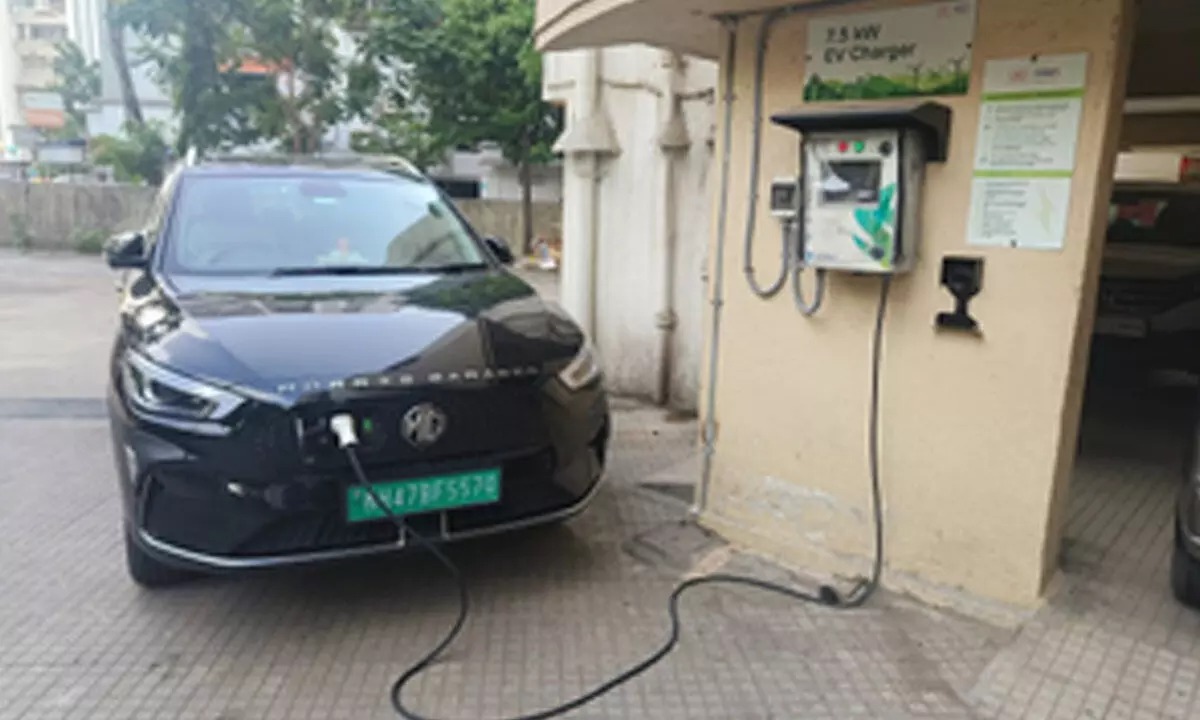
What Customers Should Consider Before Setting Up an EV Charging Station
- Location and vehicle traffic potential
- Available electrical load and sanctioned capacity
- Charger type, power rating and connector compatibility
- Expected daily charging utilisation
- Solar PV capacity and available installation area
- Whether battery storage adds economic or operational value
- Grid connectivity and applicable electricity regulations
- Payment, billing and digital monitoring systems
- Preventive maintenance and service response
- Future expansion capacity
The Business Case: Think Beyond Today’s Utilisation
An EV charging station is a long-term infrastructure investment. Early utilisation at a new site may not represent future demand. A sensible business case should therefore consider the expected growth of EV adoption, local traffic patterns, fleet demand, competition, electricity tariffs, land costs, maintenance costs and the ability to expand the charging capacity later.
Solar can add another dimension to the business case by creating an on-site generation asset. However, solar capacity should be sized based on actual site conditions and charging demand rather than using a one-size-fits-all formula.
The Future: Solar + EV + Storage + Digital Energy
The long-term opportunity is bigger than installing solar panels beside an EV charger. The emerging model is an integrated energy platform:
→ Solar PV for renewable electricity generation
→ Grid connection for reliability and additional energy
→ EV chargers for mobility
→ Battery storage for flexibility where justified
→ Smart energy management for load optimisation
→ Digital monitoring for uptime and performance
→ Data analytics for utilisation and expansion planning
This convergence of renewable energy and mobility is where the EV charging market can become particularly interesting for solar and energy companies.
What This Means for Solox
For Solox, expanding into the EV charging vertical is a natural extension of its renewable-energy capabilities. The opportunity is to position EV charging not as a standalone product, but as part of an integrated clean-energy solution.
A strong Solox proposition can focus on end-to-end project thinking: site evaluation, electrical infrastructure, solar integration, charging infrastructure, commissioning, monitoring and ongoing service—tailored to the customer’s location and usage pattern.
As India’s EV ecosystem expands, customers will increasingly look for partners who understand both sides of the equation: the energy required to charge vehicles and the renewable systems that can help supply it.
Conclusion: India’s Next Mobility Infrastructure Opportunity
India’s transition to electric mobility is creating a new infrastructure market. With public charging expansion receiving policy support and EV adoption progressing across multiple vehicle categories, the requirement for reliable charging infrastructure will only become more important.
The next opportunity is to make that infrastructure smarter and cleaner.
SOLAR + EV CHARGING = CLEANER ENERGY FOR THE FUTURE OF MOBILITY
For solar companies, EV charging opens a new vertical with the potential to combine renewable generation, electrical infrastructure, digital energy management and mobility. The companies that can connect these pieces into reliable, customer-focused solutions will be well positioned for the next phase of India’s energy transition.

Frequently Asked Questions
What is a solar-powered EV charging station?
It is an EV charging facility where solar PV is integrated into the energy system to supply some or all of the charging electricity, usually alongside grid power and, where appropriate, battery storage.
Is solar power enough to run an EV charging station?
It depends on the charger capacity, number of vehicles, charging profile, available solar area and solar resource. High-power public chargers may require grid support or energy storage even when solar is installed.
Are private companies allowed to set up EV charging stations in India?
Yes. The Ministry of Heavy Industries has stated that setting up EV charging stations is an unlicensed activity and private entities can participate, subject to applicable guidelines and requirements.
What is PM E-DRIVE?
PM E-DRIVE is the Government of India’s electric-mobility support scheme. It includes demand incentives for specified EV segments and a ₹2,000 crore allocation for deployment of EV public charging stations.
Why combine solar with EV charging?
The combination can help supply renewable electricity locally, potentially reduce grid energy purchases depending on the site economics, strengthen sustainability positioning and create a more integrated energy-management platform.