




Introduction: Solar Quality Is About More Than Efficiency
India’s solar industry is growing rapidly, creating opportunities for homeowners, commercial establishments, industrial facilities, and real-estate developers. But choosing a solar system involves more than comparing panel wattage, efficiency, and price.
Solar module compliance and manufacturer eligibility have become important considerations when planning a solar project in India.
The Ministry of New and Renewable Energy (MNRE) maintains the Approved List of Models and Manufacturers (ALMM), which identifies eligible solar photovoltaic modules and, through a separate list, solar cells. These requirements are particularly relevant to projects covered by government schemes, government-assisted programmes, open-access arrangements, and net-metering provisions. For anyone planning a solar installation in 2026, understanding these requirements can help avoid procurement and commissioning complications.
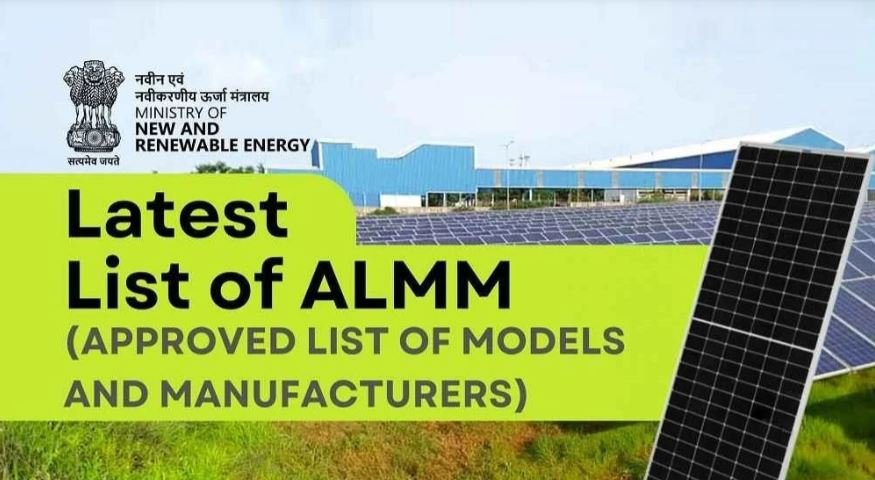
ALMM Solar Solox Energies Private Limited
What Is the ALMM?
ALMM stands for the Approved List of Models and Manufacturers. It was introduced to improve transparency, verify manufacturers, and support the reliability of solar equipment used in covered projects.
The framework includes two important lists:
- ALMM List-I: Approved models and manufacturers of solar PV modules.
- ALMM List-II: Approved models and manufacturers of solar PV cells.
These lists are updated periodically, making it important to verify the latest applicable version before finalising equipment procurement.
Solar projects are long-term investments. A residential rooftop system, a commercial installation, or a large industrial solar plant may operate for decades. Equipment selection must therefore consider quality, warranties, regulatory eligibility, and long-term performance.
In 2026, the implementation of ALMM requirements for solar cells has added another layer to procurement planning. Project developers and EPC contractors need to pay attention to the applicable module and cell requirements, along with the project category and relevant implementation timelines. MNRE has published clarifications and updates relating to the framework.
For project owners, this means that the lowest quoted price should not be the only deciding factor.
What Should You Check Before Buying Solar Equipment?
1. Verify manufacturer eligibility
Check the latest applicable MNRE lists to confirm whether the proposed modules and, where required, cells meet the project’s compliance requirements.
2. Review the project category
Requirements may differ depending on whether the installation is residential, commercial, government-assisted, or part of an open-access arrangement. Confirm the rules that apply to your specific project.
3. Confirm documentation before procurement
Ask your solar EPC partner to verify the relevant product details, manufacturer documentation, warranties, and compliance requirements before equipment is ordered.
4. Plan for approvals and commissioning
Equipment selection should be aligned with project approvals, applicable deadlines, and commissioning requirements. This is particularly important for developers managing multiple installations or projects with fixed delivery schedules.
5. Look beyond the purchase price
A dependable solar project also requires suitable system design, structural assessment, electrical protection, installation quality, and after-sales support.
What Does This Mean for Commercial Buildings and Real Estate?
For factories, offices, warehouses, apartment communities, and commercial developments, compliance should be addressed during the planning stage rather than after installation begins.
An experienced EPC partner can help assess the site’s energy requirements, review equipment options, coordinate technical documentation, and align the project with applicable regulations.
For real-estate developers, early coordination can also help integrate rooftop solar into the building’s electrical design and broader energy infrastructure.
Conclusion: Make Compliance Part of Your Solar Strategy
India’s solar market is moving towards more structured manufacturing and procurement requirements. Understanding the applicable ALMM rules helps project owners make informed decisions and reduce avoidable project risks.
At Solox Energies, we believe a successful solar installation begins with the right planning, suitable equipment, quality execution, and attention to applicable standards.
Planning a residential, commercial, or industrial solar project? Connect with Solox Energies to discuss a solution tailored to your requirements.
CLEAN | SUSTAINABLE | FUTURE
Regulatory note: ALMM applicability can depend on project category, scheme, and relevant orders or exemptions. Verify the latest MNRE notifications before making procurement or compliance decisions.